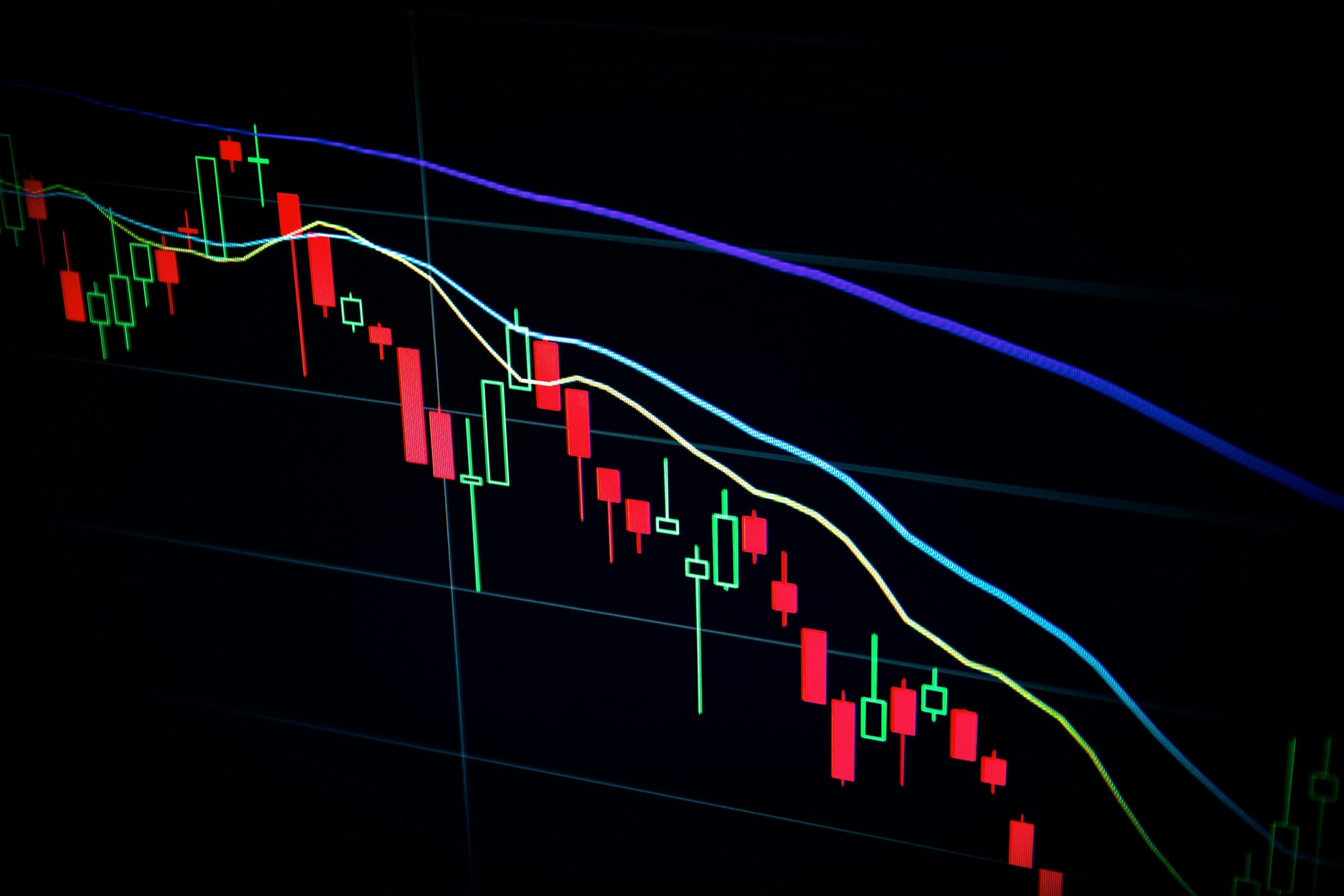
Trade Spotting
There is a particular kind of loneliness to watching someone stare at a screen in a café, their eyes darting between candle charts and order books, their coffee going cold beside them. I’ve seen it in Frankfurt, in Berlin, and on the train. A person physically present in the world, yet entirely absent from it—absorbed in the perpetual motion of numbers that mean nothing to anyone but them.
I call this phenomenon “Trade Spotting.” For a while, whenever I caught someone trading in public, I’d pull out my phone and quietly snap a photo for my Instagram Stories—a running series documenting these sightings like a kind of urban field guide. I meant it as subtle satire. A gentle, wry commentary on a lifestyle I found quietly baffling. My best friend got the joke immediately. Most of my followers, I suspect, did not. They probably thought I was celebrating these people. And that misunderstanding, I think, tells you something important about where we are culturally right now.
A Growing Tribe
Day trading—the practice of buying and selling financial instruments within the same trading day, trying to profit from short-term price movements—has grown significantly in Germany over the past few years. After the pandemic pushed millions indoors and simultaneously flooded the market with retail trading apps, a new generation of traders emerged. Platforms like Trade Republic made investing frictionless, and social media turned certain traders into lifestyle influencers. The dream was repackaged and resold: financial freedom, location independence, and being your own boss.
I understand the appeal. I really do. In a world where salaries stagnate, housing costs spiral, and many traditional career paths feel increasingly precarious, the idea that you could sit anywhere with a laptop and generate income sounds genuinely liberating. Who wouldn’t want that?
But I think there’s a crucial difference between financial literacy—which I consider genuinely valuable—and day trading as a life philosophy. And it’s that distinction I keep turning over in my mind.
The Question No One Asks
Let’s set aside, for a moment, the practical arguments against day trading: the well-documented statistics showing that the vast majority of retail day traders lose money over time, the psychological toll of constant market exposure, the stress of treating your livelihood as a zero-sum game. Those are important, but they’re not actually what troubles me most.
What troubles me is the question of meaning.
When someone asks, “What do you do for a living?” and the answer is “I trade,” what follows? What does the work produce? Who benefits? A surgeon saves lives. A teacher shapes minds. A baker feeds people something warm on a cold morning. Even a corporate accountant, for all the jokes, keeps an organization running and people employed. But a day trader? A day trader moves money from one pocket to another—or, more often, watches it disappear into someone else’s.
I’m not being deliberately unkind here. I’m genuinely asking: what is the story you tell yourself at the end of the day about what you contributed to the world?
Financial Freedom Without Substance
There’s a particular phrase that comes up constantly in trading content: financial freedom. It’s presented as the ultimate goal, the summit of personal ambition. And on one level, yes—not having to worry about money is a genuine form of freedom. I’m not dismissing that.
But freedom from something is not the same as freedom for something. Freedom from financial pressure is only meaningful if it’s in service of something else—a creative project, a cause, a relationship, a contribution. When financial freedom becomes the end point rather than the starting point, something goes wrong. The means has swallowed the purpose.
I think of some of the people I’ve watched from across café tables, headphones on, hunched over their screens at 9:45 on a Tuesday morning. They have, in some technical sense, achieved what many people spend their lives striving for. They answer to no boss. They set their own hours. And yet, what are they doing with that freedom? They’re spending it staring at the same screens as everyone else, just without the commute. The liberation feels, to me, incomplete.
Selfishness Is Not a Character Flaw, But…
I want to be careful here, because I don’t think day traders are bad people. I don’t think selfishness—in its ordinary, human form—is a character flaw. We all pursue self-interest. That’s normal and healthy.
But there is a particular flavor of self-orientation that I think becomes impoverishing over time: the kind where the accumulation of personal wealth is not a means to anything beyond itself. Where the game is the game, and winning the game is the point. I think, ultimately, human beings are social creatures who need to feel that their actions matter to other people. We need to feel useful. Seen. Needed. Connected.
Day trading, by design, is a solitary, zero-sum activity. You are not creating value—you are capturing it. You are not building something—you are positioning. And I think, sooner or later, that has to catch up with a person. Not as a moral judgment from outside, but as an inner reckoning: Is this enough? Is this what I’m for?
What Trade Spotting Was Really About
My little Instagram series was a small, silly thing. But it came from a real place of unease. Not anger—I wasn’t outraged by these people. More like a kind of melancholy recognition. Here was someone who had, in all likelihood, made a deliberate choice to structure their life around a screen and a ticker, and I couldn’t help wondering: how did they get here? What did they want when they were younger? Do they still want it?
The fact that almost nobody understood the satire is perhaps the more interesting story. We have reached a point where someone trading in a café is so normalized, so unquestioningly aspirational in the cultural imagination, that the idea of it being funny—gently, affectionately funny—didn’t even register. The joke didn’t land because the premise wasn’t legible.
That’s the part I find most worth thinking about.
A Genuinely Open Question
I want to end with something honest: I don’t have a clean answer here. I can’t tell someone else what constitutes a meaningful life. The category of “meaningful work” is contested, personal, and endlessly complicated. Maybe there are day traders who are deeply fulfilled, who use their financial returns to fund genuinely important things, who have built rich inner and social lives alongside their screens. I can’t rule that out.
But I do think it’s worth asking the question. Not just “Can I make money doing this?” but “What kind of person do I want to become? What do I want to have built—in the world and in myself—by the time I’m old?”
The chart will close. The day will end. The number will be higher or lower than it was this morning.
What else?


Leave a Reply