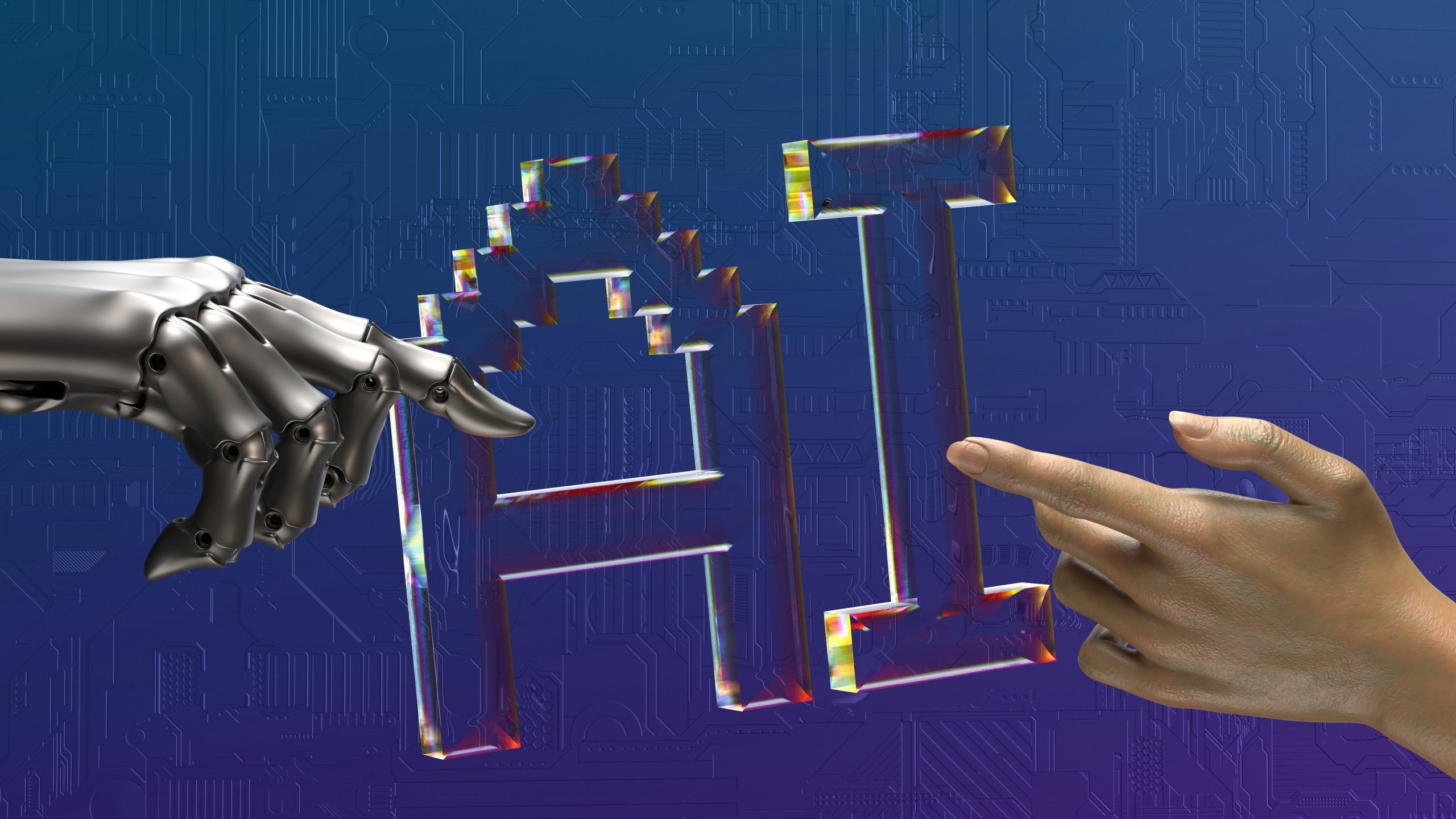
The Current AI Hype
Currently, there seems to be hardly a topic more present than artificial intelligence. You get the impression that the entire world of work, the creative industry, and perhaps even what it means to be human is being reorganized. Everywhere you hear the same sentence: You need to learn how to use AI now, or you’ll get left behind. This sentence sounds urgent, almost threatening, as if there’s a historic moment you simply cannot miss. And this is exactly where, for me, the real AI lie begins.
Not because AI is unimportant. Quite the opposite. The development is real, visible, and impressively fast. Things that seemed futuristic just a few years ago suddenly work with remarkable reliability. Software is created through simple text instructions, complex problems are analyzed in seconds, and tasks that once required specialized knowledge seem to be becoming more accessible. It would be dishonest to deny or downplay this. AI is already changing workflows, creative processes, and expectations around productivity.
Tools Are Not the Skill
The lie, however, lies in the claim that the decisive skill of the future is to operate these tools. In reality, most AI tools are remarkably easy to use. You speak or write in natural language, formulate a request, and the machine delivers an answer. The barrier to entry isn’t particularly high, and it will continue to drop with every new version. Anyone who believes today that they have a long-term advantage because they’ve learned to use a particular tool is likely confusing short-term curiosity with lasting competence. The real challenge isn’t in handling the technology—it’s in thinking itself. Those who can articulate clearly, who know what they want to achieve, and who have their own judgment will produce good results with AI. Those who can’t will simply produce mediocrity faster.
Work Doesn’t Disappear—It Changes
It’s also often claimed that AI takes work away from us. That too is only partially true. Of course, it can speed up processes, generate text, write code, or suggest ideas. At the same time, a new kind of work emerges: results need to be checked, contextualized, and corrected. You spend time evaluating suggestions, identifying errors, and making decisions that still require human understanding. The effort doesn’t necessarily disappear—it simply changes form. You work less on direct execution and more on steering, controlling, and making sense of what the machine produces. The promise of complete relief, therefore, often feels like technological wishful thinking.
There’s also a subtler effect: when everyone has access to the same tools, the tool itself loses its value as a competitive advantage. AI will likely become as ordinary as search engines or smartphones. Nobody is considered particularly forward-thinking today just for being able to use a search engine. The difference emerges elsewhere—in attention, focus, taste, and the ability to stay with something for an extended period of time. Computer scientist and author Cal Newport describes this ability as Deep Work: focused, demanding intellectual work without constant distraction. Especially in a world where machines produce content faster and faster, this distinctly human depth could become rarer—and therefore more valuable.
Creativity in the Age of Machines
A frequently asked question is whether AI can truly be creative. The results often seem impressive, sometimes even surprisingly original. Nevertheless, the impression remains that AI primarily combines, reconstructs, and varies what humans have previously created. It recognizes patterns in enormous amounts of data and generates new variations from them—but meaning doesn’t arise from the result alone. Meaning arises through experience, perspective, doubt, mistakes, and personal history. A piece of music moves us not only because of its structure but also because a human recognizes or expresses something of their own within it. Creativity is therefore more than production; it is a process of experiencing and understanding that cannot be fully automated.
The Real Danger
Perhaps the real danger of AI, then, is not that machines could replace humans. The greater danger is that humans begin to use their own abilities less. When thinking becomes effortful and a machine can immediately provide an answer, the temptation arises to remove yourself from the process. You practice less, doubt less, wrestle less with ideas. Yet it is often in this wrestling that originality is born. Technology can accelerate processes, but it cannot decide what is worth creating in the first place.
A thoughtful approach to AI therefore means neither rejection nor blind enthusiasm. AI is a tool, and like every tool, it reveals its value only through the intention of the person using it. It can help lower barriers to entry, simplify routines, or structure thoughts. At the same time, it should not become a substitute for independent thinking. Perhaps the healthiest approach to AI resembles our approach to other digital technologies: deliberate rather than reflexive, selective rather than constant.
Don’t Forget How to Think
In the end, it may turn out that being fit for the future has less to do with technical adaptation than with a very old skill—the ability to remain human. To develop concentration, pursue your own ideas, take time for depth, and not automatically choose every shortcut. AI will make many things faster, more efficient, and possibly more convenient. But it cannot determine which questions matter, which art has meaning, or which life feels worthwhile.
Perhaps the true AI lie, then, is believing that the defining task of our time is to get better at operating machines. The real task is, rather, not to forget how to think without them.
Leave a Reply